
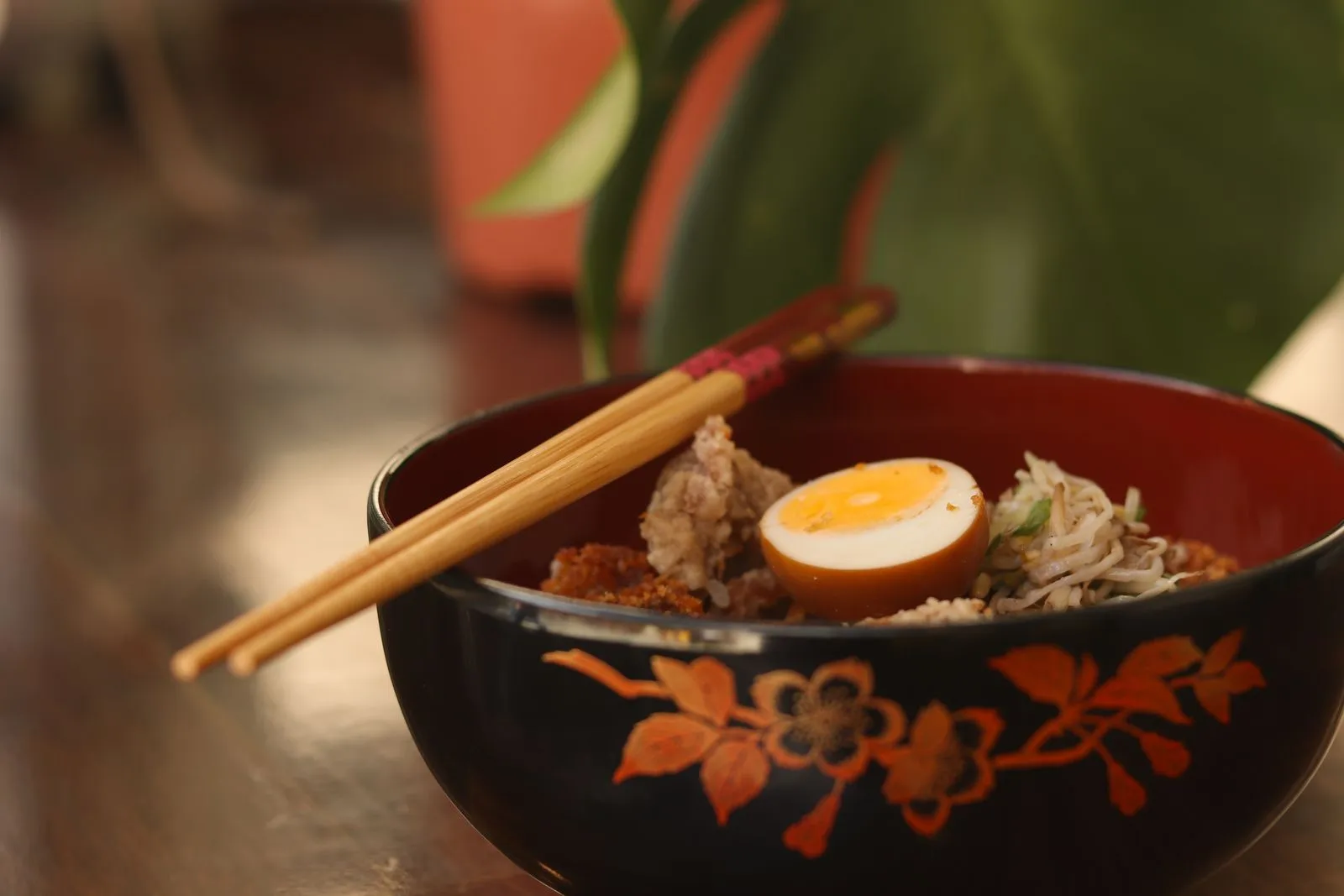
Dry ramen is served without a pool of broth, so the sauce, toppings, and noodles need to come together in each bite. A few simple habits make the difference: mix from the bottom, loosen clumps gently, and eat while the noodles are warm. These steps help distribute flavor without crushing the noodles or letting them cool into a sticky mass. Use them at a ramen bar or when preparing dry ramen at home.
Mix From the Bottom
Sauce often settles beneath the noodles, so start by lifting noodles from the bottom of the bowl with chopsticks or a fork. Turn them over the toppings, then repeat from a different spot. This folds the sauce through the noodles more evenly than stirring only at the surface.
Use a gentle lifting and turning motion rather than pressing down or rapidly spinning the noodles. That helps keep their springy texture intact and moves toppings through the bowl. If the sauce looks concentrated at the bottom after several turns, lift and fold once more before taking your next bite.
Loosen Clumps Gently
Warm noodles can stick together, especially where sauce has gathered. Separate clumps with chopsticks or a fork as you mix, working a few strands loose at a time. Avoid pulling hard; tearing or crushing the noodles can make them feel soft and uneven.
If the noodles seem dry or difficult to separate, check whether the sauce is still pooled underneath. Bring that sauce up with the noodles before adding anything else. At home, follow the recipe’s instructions for any reserved cooking water or extra sauce rather than adding liquid by guesswork.
Eat While They’re Warm
Dry ramen is usually most enjoyable soon after it is served. Warm noodles feel supple, and the sauce coats them readily. Take a few moments to mix thoroughly, then begin eating rather than leaving the bowl untouched while you finish other tasks.
If you are sharing a table or pausing between bites, toss the noodles lightly again before continuing. This redistributes sauce that may have settled and helps keep the toppings mixed in. Avoid repeatedly stirring for a long time; that can cool the noodles and make them clump.
Balance Each Bite
Try to pick up noodles with a little topping and sauce in each bite. If one section tastes too strong or too plain, fold that area into the rest of the bowl before adjusting anything. A small taste first helps you decide whether the dish needs more mixing rather than extra seasoning.
Add optional condiments gradually, tasting after each addition. Chili oil, vinegar, or other seasonings can quickly change the balance and texture. When dining at Savannah Ramen Bar in Savannah, ask the staff which toppings or condiments pair well with your bowl if you want guidance.
For the best dry ramen texture, lift noodles from the bottom, loosen clumps without force, and eat while the bowl is warm. Mix in small rounds, taste, and adjust only when needed. These habits make it easier to enjoy a balanced bowl, whether you’re eating out or making dry ramen at home.