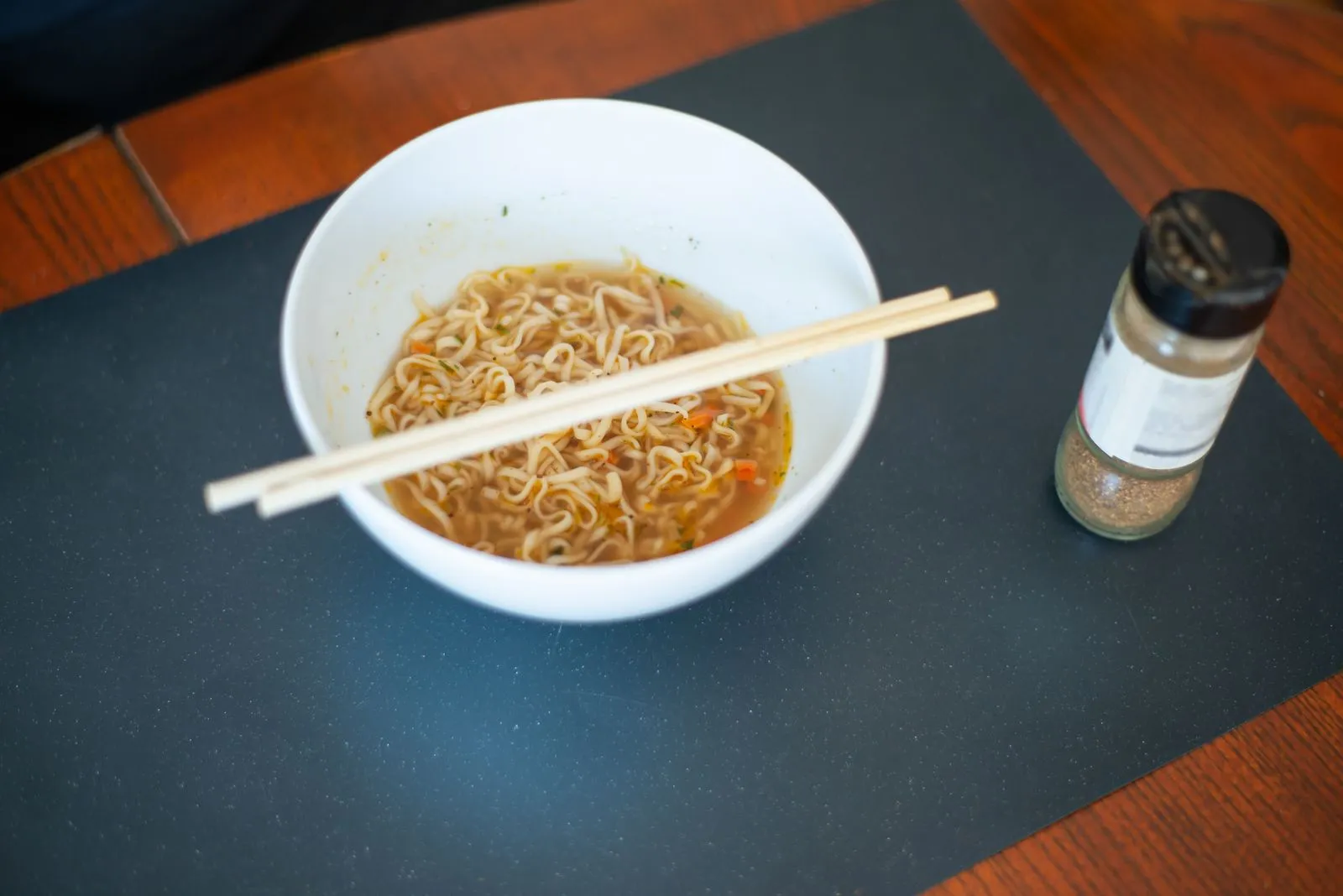
Dry ramen and soup ramen share noodles and many familiar toppings, but they deliver different experiences. Soup ramen surrounds noodles with broth; dry ramen is tossed with a savory sauce that clings directly to them. That simple change affects how concentrated each bite tastes, how the noodles feel, and how toppings fit into the bowl. Understanding the difference can help you choose a style that suits your appetite and enjoy each bowl as it is intended.
Sauce replaces the broth
Soup ramen gets much of its character from broth, which carries seasoning throughout the bowl. Dry ramen uses a smaller amount of concentrated sauce instead. The sauce is mixed with the noodles so it coats their surfaces, delivering seasoning in each bite rather than through spoonfuls of liquid.
Because there is no large pool of broth to dilute the seasoning, the sauce can taste especially direct. Depending on the recipe, it may bring savory, salty, tangy, spicy, or rich notes. The goal is not simply to make the noodles dry; it is to balance enough sauce with the noodles and toppings for a cohesive bowl.
The noodles have a different bite
In soup ramen, noodles sit in hot broth and continue absorbing liquid as the bowl is served. Dry ramen noodles are tossed with sauce, so they remain more distinct from a surrounding broth. Their chew and surface texture stand out, especially when the sauce clings evenly without weighing them down.
Mixing matters. A thorough toss distributes sauce from the bottom of the bowl across the noodles, while leaving them unmixed can make some bites more seasoned than others. If the noodles are served with toppings, folding those in gradually helps spread their flavors and textures without burying the noodle bite.
Toppings become part of the mix
Soup ramen toppings often sit on or around the broth, where each ingredient contributes to the overall bowl. With dry ramen, toppings can be mixed directly into the noodles. Crisp vegetables, tender meat, egg, or crunchy garnishes create contrasts against the coated noodles and can change the flavor from one forkful to the next.
Try a bite of noodles before mixing everything together, then combine the toppings to taste. This lets you notice the sauce on its own and decide how much of each topping to include. If a garnish is meant to stay crisp, add it gradually or keep some on top rather than stirring it in immediately.
Choose the style you want
Soup ramen is a natural choice when you want a warm, brothy meal and enjoy sipping between bites. Dry ramen suits diners who want sauce-forward flavor and noodles that take center stage. Neither style is inherently better; they emphasize different parts of ramen and offer distinct textures.
At Savannah Ramen Bar in Savannah, you can ask about the sauce and toppings in a dry ramen bowl before ordering. If you are new to the style, start by tasting the noodles as served, then toss in the toppings. That gives you a clear sense of how the concentrated sauce shapes the whole bowl.
Dry ramen differs from soup ramen because sauce coats the noodles instead of broth surrounding them. That creates a more concentrated flavor and puts the noodles’ chew and toppings at the center of the meal. When ordering, ask what the sauce tastes like and whether to mix the bowl. Visit Savannah Ramen Bar to explore the style for yourself.